
Mutual Funds
Explore professionally managed investment solutions across equity, debt, hybrid and other categories.
Mutual fund investments are subject to market risks.
Explore Mutual FundsInvestments are subject to market risks. Read all scheme-related documents carefully.
Our services
Each category below is regulated differently and carries its own risks. We describe what each one is and what it involves, so you can judge whether it belongs in your plan.
Explore professionally managed investment solutions across equity, debt, hybrid and other categories.
Mutual fund investments are subject to market risks.
Explore Mutual Funds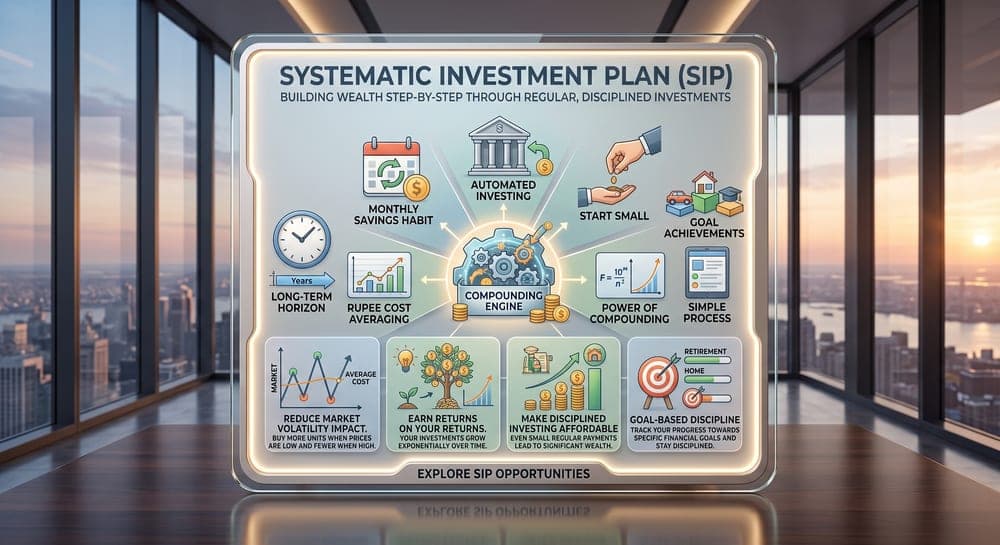
Build disciplined investing habits through systematic investments aligned with your financial goals.
A SIP is a method of investing. It does not guarantee profits or protect against losses.
Start Planning
Protect yourself and your family with insurance solutions designed around your financial needs.
Subject to policy terms, conditions and exclusions.
Explore Protection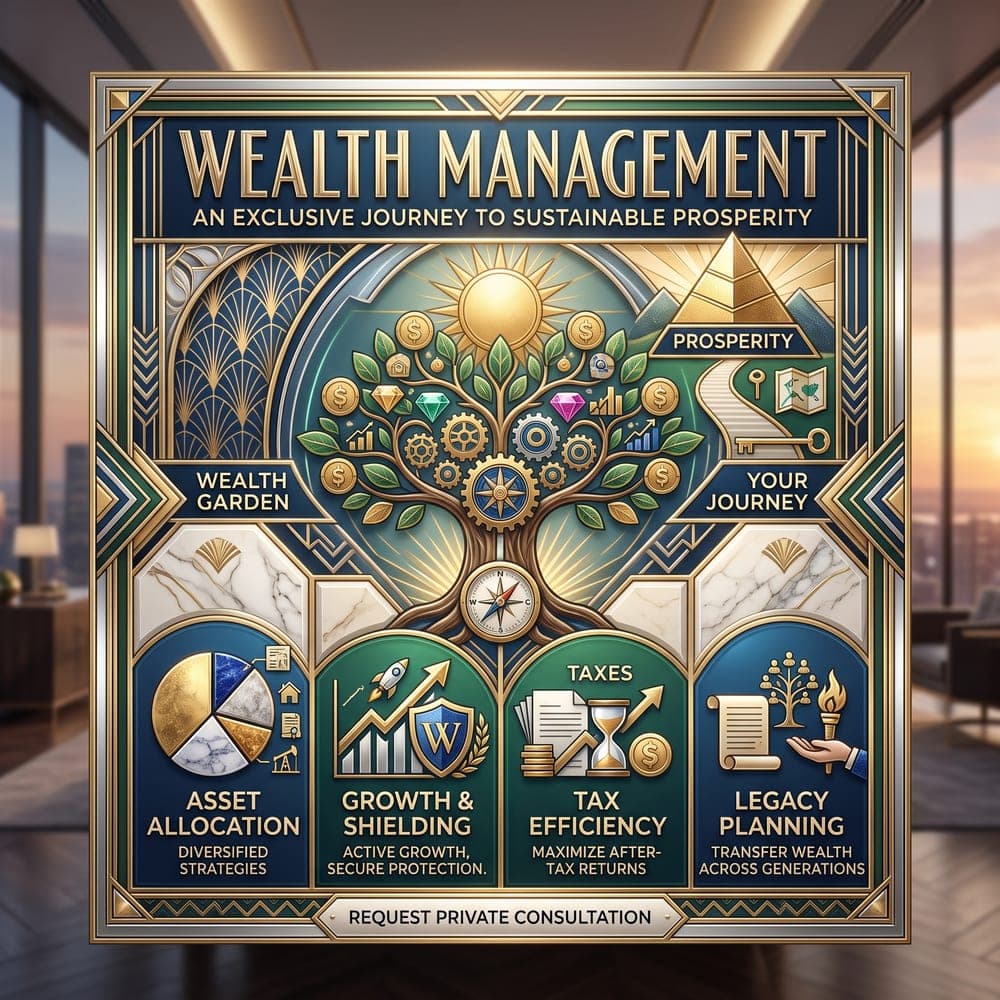
Develop a structured approach towards managing and growing your wealth.
Explore Wealth Solutions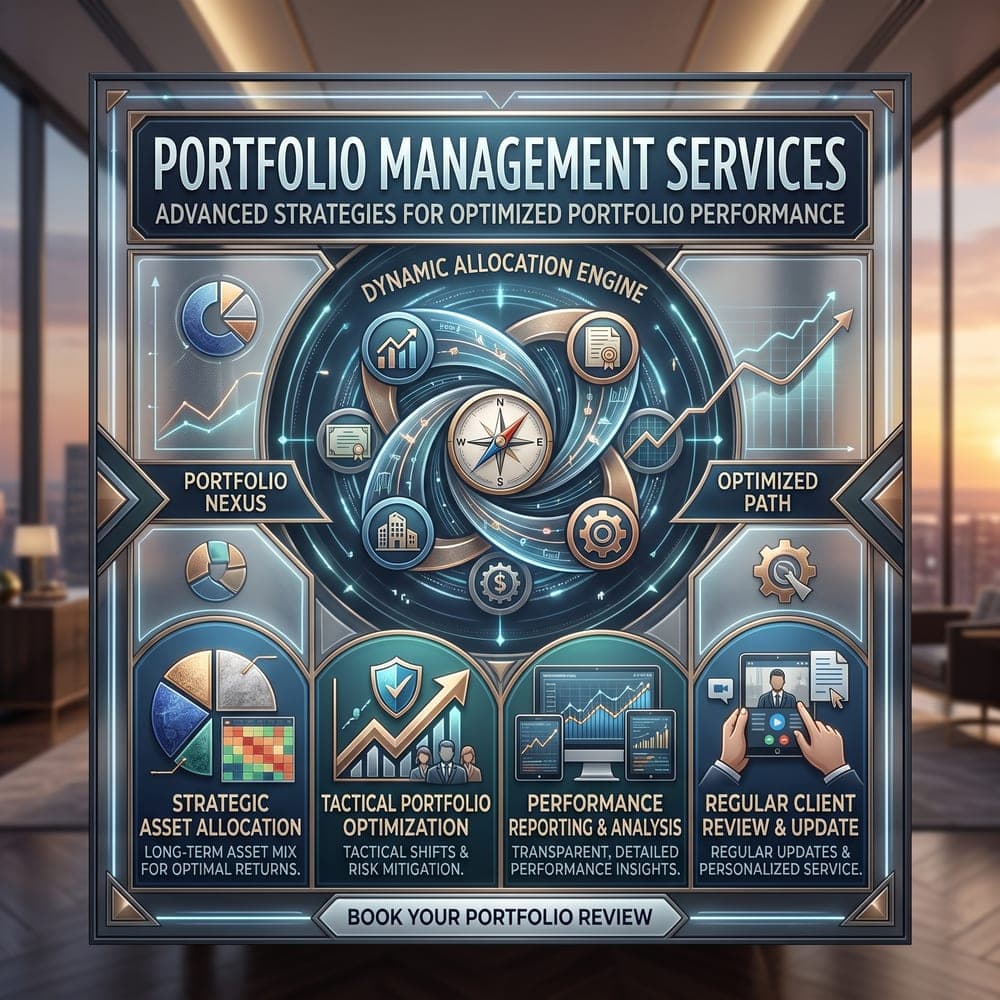
Explore portfolio management solutions for eligible investors, subject to applicable regulations and investment requirements.
Eligibility criteria and minimum investment thresholds apply. Returns are not assured.
Learn More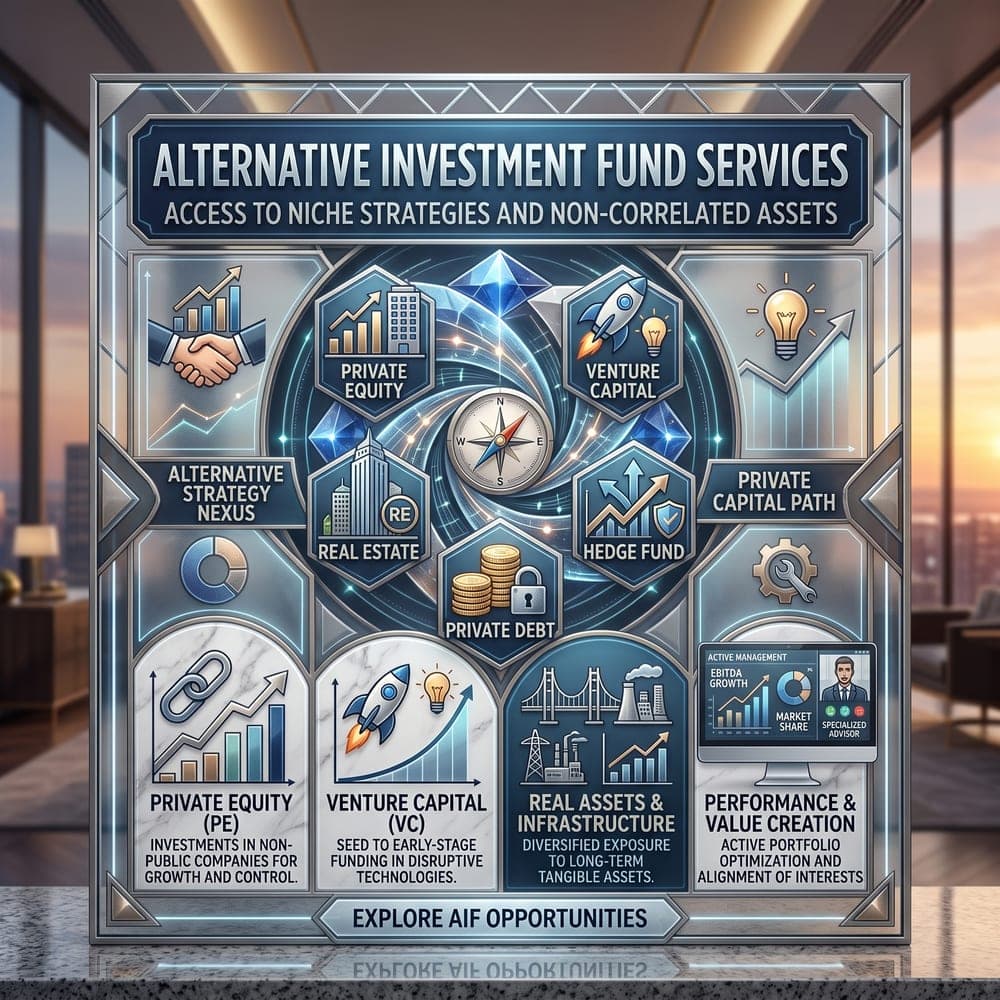
Explore alternative investment opportunities for eligible investors, subject to applicable regulations, suitability and minimum investment requirements.
Higher risk, limited liquidity and minimum investment requirements apply.
Explore AIFsWork out what retirement may cost in future rupees, and what it takes to build and then draw down a corpus.
Plan RetirementEstimate education costs at education-specific inflation and structure a plan around the date the money is needed.
Plan EducationPlan for a dated family expense that rises with inflation, without disturbing your other long-term goals.
Plan This GoalStart from what you want to achieve and when, then work backwards to the investment that could support it.
Explore Goal PlanningUnderstand how different products are taxed in India, and how tax treatment affects what you actually keep.
Tax treatment depends on individual circumstances and may change. This is not tax advice.
Understand Tax EfficiencyGuidance on the options available, the trade-offs between them, and how each fits your circumstances.
Speak With Our TeamA disciplined, review-led approach to building wealth over decades rather than chasing short-term movements.
Explore the ApproachIn more detail
Plain explanations of what each service involves, including what it does not do.
Goal-based planning starts from the outcome rather than the product. A goal needs three things to be planned: a rupee figure in today's money, the date the money is needed, and an honest view of what you can commit each month.
Once those exist, inflation gives you the future cost, and the time available narrows the sensible range of investments. Two goals of the same size but different dates are usually funded very differently.
Retirement is the largest goal most people fund, and the only one with no borrowing option. It has two distinct phases: accumulating a corpus while working, and drawing it down afterwards without exhausting it.
The accumulation phase is arithmetic. The drawdown phase is where most plans are underestimated, because withdrawals have to keep rising with inflation while the remaining balance still has to last.
Education has an immovable date. A child turns eighteen whether or not the corpus is ready, which makes this one of the few goals where the deadline cannot be renegotiated.
Education costs in India have historically risen faster than headline inflation, which is why our education calculator keeps education inflation as its own separate input rather than reusing a general figure.
A wedding is a dated, inflation-linked family expense. Planning for it in advance keeps it from being funded by disturbing long-term investments or by borrowing at short notice.
The planning approach makes no assumption about who is getting married or what the event should look like. You set the scale; the arithmetic follows from it.
Every return you see quoted is a pre-tax number. How much reaches you depends on the category of investment, how long you held it, and whether tax falls each year or only when you sell.
Tax efficiency is a consideration, not an objective. An investment that suits your goal and attracts some tax is a better outcome than an unsuitable one chosen because it is taxed lightly.
Tax rules, rates and holding periods change, and their effect depends on your individual circumstances. Nothing on this website is tax advice. Please consult a qualified tax professional about your own position.
Most financial decisions are not a choice between a good option and a bad one. They are a trade-off — between liquidity and return, between certainty and growth, between what a goal requires and what you can bear.
Our role is to lay out those trade-offs clearly, explain what a product actually does, and be direct about what it costs and what can go wrong.
Wealth is usually built by a modest amount invested consistently for a long time, reviewed periodically, and left alone in between. It is rarely built by identifying the right thing at the right moment.
The hard part is not the arithmetic. It is staying invested through the periods when doing so feels unwise — which is precisely when the discipline matters most.
Life goals
Each of these has a calculator attached, so you can see the arithmetic before you speak to anyone.
Estimate the future cost of education and understand how much you may need to invest today.
Cost a wedding in future rupees and plan for it without disturbing your other goals.
Understand what your current lifestyle may cost decades from now, and what it takes to fund it.
Plan for a down payment, and understand what a home loan would cost over its full tenure.
Build wealth steadily through disciplined investing across market cycles.
Work towards the point at which your investments, rather than your salary, can support your lifestyle.
Building Wealth. Securing Futures.
Whether you are investing for your future, planning for retirement, protecting your family, or building long-term wealth, Inamdar Wealth can help you explore solutions aligned with your financial goals.
Investments are subject to market risks. Returns are not guaranteed. Any discussion is educational in nature and is not a recommendation to buy or sell a financial product.